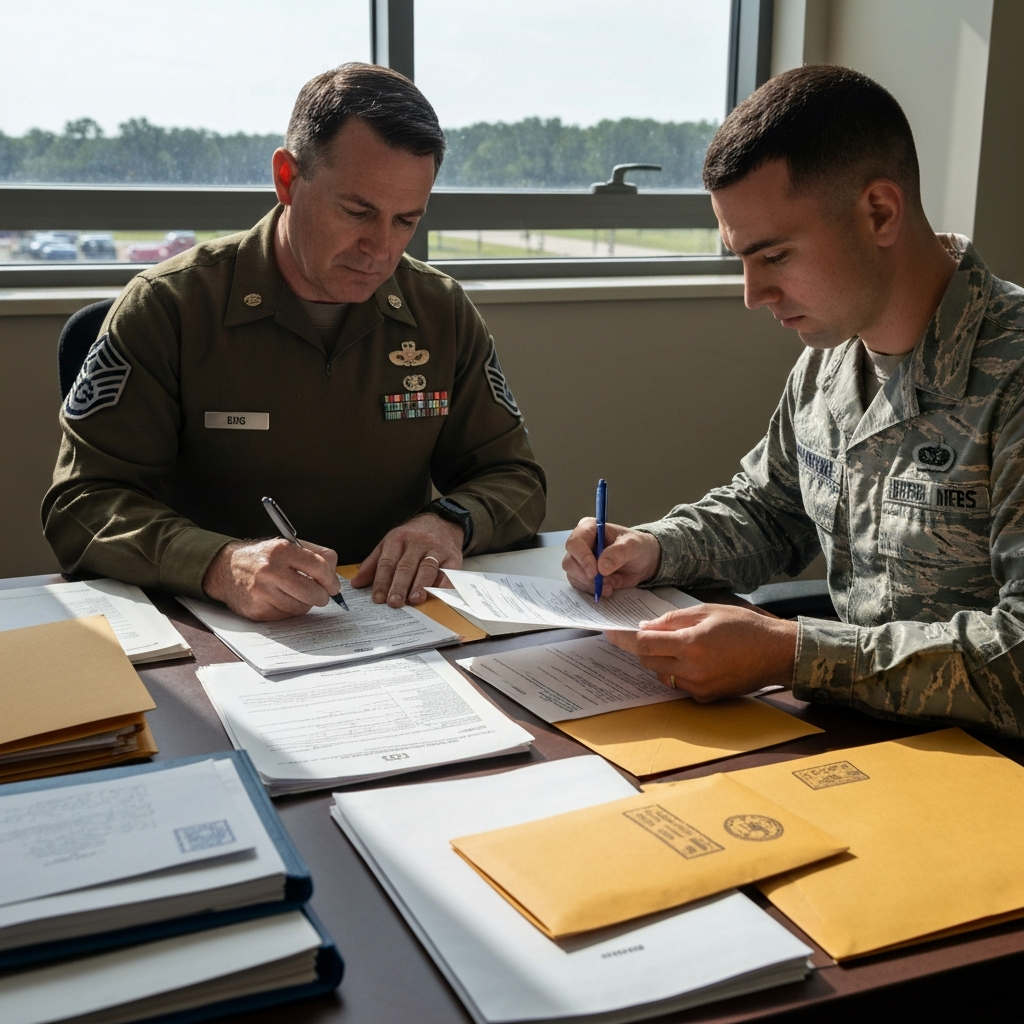
Military Retirement Paperwork: A Checklist That Actually Works

How to Navigate Military Retirement Paperwork

Retiring from the military is a significant milestone. One of the first steps is to start preparing your paperwork well in advance. Begin this process by contacting your personnel office. They will guide you through obtaining, completing, and submitting the necessary forms.

Military personnel

Gathering Required Documentation

Compiling your documentation is a vital step. You will need several key documents:

Military personnel
  • DD Form 214 (Certificate of Release or Discharge from Active Duty)
  • Retirement application (DD Form 2656)
  • Medical records
  • Orders or other official announcements of retirement
  • Last Leave and Earnings Statement (LES)
  • Marriage certificate (if applicable)

Ensure these documents are current and accurate. Updating your records beforehand will save time and prevent issues later.

Military personnel

DD Form 214

The DD Form 214 is crucial. It serves as your official military discharge paper. It includes essential information like your service dates, type of discharge, and military job history. Review this form thoroughly to ensure all details are correct. Any errors need to be corrected immediately by contacting your personnel office.

Military personnel

DD Form 2656

Another important document is the DD Form 2656, the Data for Payment of Retired Personnel. This form determines your retired pay and any deductions. Filling this out accurately is essential for proper payment processing. Common sections include personal information, retirement details, and survivor benefit information.

Military personnel

Medical Records

Having a complete set of your medical records is essential. These records will be needed for post-retirement healthcare and potential disability claims. Request copies from your military treatment facility well before your retirement date to ensure you have everything you need.

Military personnel

Final Leave and Earnings Statement (LES)

Your final LES is important for confirming your last pay details. It includes your final pay calculation, accrued leave payment, and tax details. Keep this statement for future financial reference and proof of your service compensation.

Military personnel

Applying for Retirement Pay and Benefits

After gathering all required documents, submit your applications for retirement pay and benefits. Each military branch has specific requirements. Check with your personnel office for branch-specific instructions. Using online resources like MyPay can simplify this process. Tracking your submissions is key to ensuring they are processed promptly.

Military personnel

Survivor Benefit Plan (SBP)

Consider enrolling in the Survivor Benefit Plan (SBP). This plan provides financial support to your beneficiaries in the event of your death. Carefully review the options to choose the coverage that best meets your family’s needs. Make sure to sign up for SBP at the time of your retirement to avoid penalties.

Military personnel

Healthcare After Retirement

After retirement, your healthcare needs will be covered by TRICARE. You have various options depending on your location and desired coverage. TRICARE Prime and TRICARE Select are the most common. Enroll in your chosen plan promptly to avoid gaps in coverage.

Military personnel

Transition Assistance Program (TAP)

Before finalizing your retirement, attend a Transition Assistance Program (TAP) workshop. These workshops provide critical information on transitioning to civilian life. Topics include job search strategies, VA benefits, and other support programs. Participating in TAP ensures you are well-prepared for your post-military career.

Military personnel

Tax Considerations

Military retirement pay is taxable income. Understanding your tax obligations will prevent surprises during tax season. Consult a tax professional familiar with military benefits. They can offer guidance on federal and state tax liabilities and potential deductions.

Military personnel

Updating Personal Information

Ensure your personal information is updated with the Defense Finance and Accounting Service (DFAS). Changes in your address, direct deposit details, or marital status need to be reported promptly. Keeping your information current ensures uninterrupted receipt of retirement benefits and communications.

Military personnel

Veterans Affairs (VA) Benefits

Explore benefits offered by the Department of Veterans Affairs (VA). Apply for VA healthcare, disability compensation, and other support services. Submitting applications early ensures timely processing and access to benefits. Utilize VA resources for guidance and assistance throughout this process.

Military personnel

Social Security

Coordinate your military retirement benefits with your Social Security benefits. Know how and when to apply for Social Security to maximize your retirement income. Many retirees find consulting with a Social Security representative helpful in understanding their benefits.

Military personnel

Estate Planning

Plan your estate to ensure your beneficiaries are taken care of. Update your will, designate power of attorney, and consider setting up a trust if necessary. Proper estate planning provides peace of mind and secures your family’s financial future.

Military personnel

Financial Planning

Create a comprehensive financial plan for your retirement years. Establish a budget that reflects your new income and expenses. Consider meeting with a financial advisor specializing in military retirement to optimize your retirement savings and investments.

Military personnel

“`

Related Articles

Jason Michael

Jason Michael

Author & Expert

Jason Michael is a Pacific Northwest gardening enthusiast and longtime homeowner in the Seattle area. He enjoys growing vegetables, cultivating native plants, and experimenting with sustainable gardening practices suited to the region's unique climate.

15 Articles
View All Posts

Subscribe for Updates

Get the latest articles delivered to your inbox.